Monday, September 28, 2009

Pregnancy Miracle Review

A woman's greatest joy is to have a child and she feels complete when the miracle happens. The joy of Giving birth to a buoyant and a healthy baby has no bounds to both the parents and when such a thing does not happen for a long time, it is time that a married couple looked for help and aid. Many women unknowingly suffer from reproductive complications such as PCOS, Endometriosis or chronic ovarian cysts and these interfere with normal pregnancy. The pregnancy miracle e-book by Lisa Olson is a guide that can help infertile or impeded women get pregnant without the aid of medication or a doctor's help. This guide uses all natural methods to completely reversing infertility thereby allowing women to conceive and give birth to healthy kids without any medical intervention.

Lisa Olson herself was once a chronic infertile lady and with the e-book she is sharing her experiences and secrets of how she got pregnant using non-medical techniques. This book discusses the use of natural methods and nutritional changes required to cure infertility and get pregnant instead of medical aid to become the mother of a healthy child.

This e-book on pregnancy miracle is designed with a five step process for an infertile woman to become pregnant. In fact, many women from across 130 countries are known to have benefited from the experience sand steps outlined in the "Pregnancy Miracle" e-book. These women have become pregnant and conceived healthy babies to turn into happy, satisfied and proud mothers after they had lost all hope of enjoying motherhood.

As per research, all these women have achieved the miracle without drugs, OTC medications or even surgery. Of course, drugs required in the normal course of pregnancy would be taken, but none were actually consumed to get pregnant in the first place. When asked, many of them said that all they did was to follow the advice in the e-book and nothing else.

The book itself is very useful and is entirely research based and the techniques explained therein have been scientifically proven. In fact, a set of data compiled for the sake of this research states that out of every hundred infertile women who have used conventional treatment to be rid of infertility, only 7 have been successful. The rest have ended up in a worse state than they were actually in.

The above statistics show the effectiveness of conventional medication for infertility and thus the author does not advocate the use of any drugs in her Pregnancy Miracle Program. Infertility is in fact a holistic condition and can be caused by numerous reasons. The pregnancy miracle explains these and advocates the methods of getting over hurdles in getting pregnant systematically.

The e-book is particularly useful for infertile woman who want to understand the causes and remove misconceptions of infertility and follow the five step process to motherhood.

pregnancy miracle reviewDo You Want To Get Pregnant Fast Using Just Naturally Proven Infertility Cure Methods Which are Safe Cheap and Void of Any Side Effects? Click On The Following Link To Instantly Download Lisa Olson's Pregnancy Miracle Guide.

Tuesday, September 22, 2009

Dramatic Fall In Heart Attacks After Smoking Bans In North America And Europe

North America and Europe have seen 17% fewer heart attacks one year after passing smoking ban legislation, compared to communities that did not introduce new smoking restrictions. A report, published in Circulation: Journal of the American Heart Association explained that the number of heart attacks kept falling with time.

The meta-analysis - a study of 13 major studies in which scientists looked at changes in heart attack incidences after smoking bans were introduced in the USA, Canada and Europe - found that the total number of heart attacks dropped immediately, 17% within one year, accumulating to 36% over a three-year-period.

James M. Lightwood, Ph.D., study co-author, assistant adjunct professor in the department of clinical pharmacy at the University of California, San Francisco said "While we obviously won't bring heart attack rates to zero, these findings give us evidence that in the short- to medium-term, smoking bans will prevent a lot of heart attacks. The studies on this issue now have long enough follow-up periods so that we can see exactly how big the effect is."

Lightwood added that the community effect is consistent with likely individual risk and exposure scenarios. For example, non-smokers who are exposed to passive smoke inhalation in the workplace or at home have a 25% to 30% higher risk of developing heart disease American Heart Association's Heart Disease and Stroke Statistics 2009 Update. According to this new research, this specific risk may be even higher.

Lightwood said "This study adds to the already strong evidence that secondhand smoke causes heart attacks, and that passing 100 percent smoke-free laws in all workplaces and public places is something we can do to protect the public. Now we have a better understanding of how you can predict what will happen if you impose a smoking-free law."

This study provides strong support for the argument that smoke free laws protect public health, said David Goff M.D. Ph. D., Chair of the Department of Epidemiology and Prevention and Professor of Public Health Sciences and Internal Medicine at Wake Forest University School of Medicine in Winston-Salem. Goff is also an American Heart Association national spokesperson.

Goff said "This is good evidence that the benefits are realistic and consistent with reasonable estimates of the harm imposed by secondhand smoke. It is important to move forward now with widespread implementation of smoke-free laws. At a time of great concern over the financial sustainability of our healthcare system, smoke free laws represent an inexpensive approach to reducing heart attacks, and, probably, other cardiovascular conditions."

"Declines in Acute Myocardial Infarction After Smoke-Free Laws and Individual Risk Attributable to Secondhand Smoke"

by Christian Nordqvist

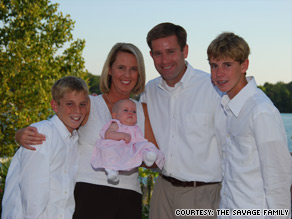
Fertility clinic to couple: You got the wrong embryos

(CNN) -- On a cold morning in February, 10 days after undergoing in vitro fertilization, Carolyn Savage lay in bed at her Ohio home waiting for the results of her pregnancy test.

basicofhealth.blogspot.com is your best source for health news headlines, healthy living, diet, weight loss, natural health, and family health advice And more,Infertility, Carolyn Savage, Ohio, New York, American Society for Reproductive Medicine, Pregnancy and Childbirth, Georgia, Culture and Lifestyle, Medicine, David Adamson, Sexual and Reproductive Health, Family, Atlanta, Health and Fitness, Sean Savage, In Vitro Fertilization Time was moving slowly. It was getting late and the call from the fertility clinic should have come by lunchtime.

"We were waiting and waiting and the call seemed like it would never come," Savage said.

Finally, around 4 p.m., Carolyn's husband, Sean, got the call at work.

"The doctor told me in one sentence, 'Carolyn is pregnant, but we transferred the wrong embryos,'" he said. "I didn't even know that could physically happen. It was a total shock, totally beyond the realm of possibility."

In a tragic mix-up, the Savages say the fertility clinic where Carolyn underwent in vitro fertilization implanted another couple's embryos into Carolyn's uterus.

In essence, she had become an unwitting surrogate for another family.

After receiving the news, Sean hung up the phone and drove straight home to tell his wife in person.

"He walked in and was as white as a sheet," Carolyn said. "He told me, and I think he repeated himself two or three times, and I kept saying 'You're joking.' I kept yelling at him stop it but there was nothing on his face indicating a joke." Video Watch more on the Savages and their reaction to their situation »

Incredulity turned to shock, and when that shock melted, so did the couple's hope for having another child of their own. At the time, Carolyn was 39 and her chances of having a child naturally after this one were waning.

"That was the beginning of a very treacherous and emotional journey for us," said Sean.

"I don't think I've ever cried so much in my life," said Carolyn. "It was such a nightmare and, in a way, I felt violated."

That nightmare was the tipping point on a pregnancy path marred by failed attempts and painful miscarriages.

Only the birth of the Savages' first child was easy. Their second child, born almost three years later in 1997, was 10 weeks premature after Carolyn developed life-threatening complications.

"That was a scary time for us," said Carolyn. Yet after she recovered, the Savages consulted with a doctor and remained intent on pursuing future pregnancies.

It would prove exceedingly difficult. Carolyn and Sean tried on and off for 10 years to have another child before turning to IVF. Eventually, Carolyn became pregnant with the couple's third child, resulting in another difficult pregnancy and premature birth. Their daughter is now a healthy 18-month-old.

With five embryos left over from IVF -- and despite the risks to Carolyn's health -- the Savages, guided by their religious beliefs, refused to let the unused embryos at the clinic languish.

February 6 was when they thought they had three of their own embryos implanted by the fertility clinic.

Cases like these, while tragic, are exceedingly rare, said Dr. David Adamson, a reproductive endocrinologist and past president of the American Society for Reproductive Medicine.

"There are well in excess of 100,000 embryo transfers every year in this country," said Adamson. "The fact that this happens once in several hundred thousand embryo transfers means the vast majority of the time, systems do protect from this taking place."

Groups like the ASRM have a series of strong protocol recommendations for in vitro procedures, such as accurately labeling embryos with the patient's name and Social Security number, and color-coding samples uniquely to avoid confusion. These identification procedures are not legally mandated, but mistakes can occur if they are not followed, said Adamson. After learning about the mistake, the Savages made two decisions right away: They would not abort the baby, and when he was born, they would relinquish the baby to his DNA parents.

"They didn't choose this path either," Carolyn Savage said of the DNA parents, who declined to speak with media. "We knew if our embryo had been thawed and negligently put into another woman, we would expect that the child would be returned to us."

The Savages are not releasing the name of the clinic where they underwent the IVF procedure, but provided CNN with proof of their reproductive predicament, including results of amniocentesis, a genetic test, indicating the baby Carolyn is carrying is not theirs.

They have met with the baby's DNA parents, and according to Carolyn the DNA-related mother of the child has come along for one doctor's appointment.

"We knew based on legal precedent that custody would be lost, and we agree with that precedent," said Carolyn, alluding to a similar case of errant IVF in 1999 in New York in which custody was awarded to the genetic parents.

The Savages are grimly aware that they will have to do the same thing soon. Carolyn is now 35 weeks pregnant and expecting to deliver within the next couple of weeks. It is a countdown fraught with mixed emotions.

As the process has gone along, it has been exceptionally difficult imagining this playing out," Sean Savage said.

"There are so many ways to walk into that delivery room," Carolyn. "We're trying to mentally frame it instead of a loss -- it is a loss, I don't want to say that it isn't -- but we're trying to look at it as a gift we're giving someone else."

The Savages say the five embryos they originally had cryogenically preserved at the clinic in Ohio are still unused and have been moved to another clinic in Atlanta, Georgia. They say doctors have advised against any more pregnancies for Carolyn, so they are working out terms with a gestational carrier, or surrogate, to carry some of those embryos for them.

Still, even if a surrogate can eventually help them expand their family, the Savages say that the memory of the child they gave up will always linger.

"I know that tug will be there every day wondering if the baby's happy, healthy and OK," said Carolyn.

"We want him to know that it wasn't that we didn't want him, but too many people wanted him," said Sean. "We gave him up because it was the right thing to do."

By Stephanie Smith

Democratic chairman pushes for health care changes

WASHINGTON – Bidding for support from Democrats as well as a single Republican, the chairman of the Senate Finance Committee gaveled open a long-awaited debate over health care Tuesday with fresh plans to reduce costs on working-class families and impose new obligations on the insurance industry.

"This is our opportunity to make history," said Sen. Max Baucus, D-Mont., who announced he was adding $50 billion to draft legislation to help those who would be required to purchase insurance.

The Republican whom Baucus has courted most assiduously, Sen. Olympia Snowe of Maine, said noncommittally the legislation was "a solid starting point — but we are far from the finish line."

Democrats hope to push the bill through committee by the end of the week, although it was clear many Democrats want to see changes first. In one statement that could cause political heartburn for Democrats and President Barack Obama, the director of the Congressional Budget Office, Douglas Elmendorf, said the proposal could wind up reducing benefits for seniors enrolled in private Medicare plans.

Obama has said, "Nobody is talking about cutting Medicare benefits."

Elmendorf also estimated in a letter to Baucus that some families with annual incomes in the range of $66,000 could wind up spending as much as 20 percent of that — $13,300 — in out-of-pocket health expenses such as premiums and copays.

The panel is the fifth and last of the congressional committees to review Obama's call for far-reaching legislation to reduce the ranks of the uninsured, expand protections for those already covered and generally reduce the ruinous growth in medical costs nationwide.

Baucus has said he hopes the committee can complete work by week's end, although more than 500 amendments were pending to the 10-year, nearly $900 billion bill.

Most Republicans were far harsher in their appraisal than Snowe, although they paused first in their criticism long enough to praise Baucus for spending months in an attempt to seek a bipartisan compromise.

Sen. Jon Kyl, R-Ariz., called the measure a "stunning assault on our liberty" and cited a requirement for individuals and families to buy insurance. Sen. Charles Grassley of Iowa, R-Iowa, who had been involved in private negotiations on the Baucus plan, said the Senate Democratic leadership had imposed a mid-September deadline, "causing the end to our bipartisan work before it was done." He called it an absurd move, "utterly and completely appalling."

It was unclear whether the committee would debate Baucus' decision not to permit the government to sell insurance in competition with private industry. Many liberal Democrats favor the idea, saying it is essential to hold down costs, but some moderates inside the party are opposed, as are all Republicans.

Baucus' bill calls instead for nonprofit co-ops to compete with private industry.

Approval of legislation by the Finance Committee would clear the way for action within a week or so on the Senate floor. Across the Capitol, majority Democrats are working on the same timeline as they push for a vote in the House.

So far, all four committees to vote on the issue have done so strictly along party lines, and Republican leaders have worked hard to avoid helping the Democrats and Obama gain a significant accomplishment. But Baucus' oft-stated desire for bipartisanship pushed his bill toward the political center, to the consternation of fellow Democrats, and the changes he unveiled seemed designed to appeal to critics within his own party as well as to reach out to Snowe.

The most significant would sweeten the subsidies for individuals and families with incomes up to four times the government's poverty level — $43,320 for individuals and $88,200 for a family of four. In addition, Baucus called for lower out-of-pocket medical costs for some lower-income families, and recommended making it easier for those who cannot afford the coverage offered by employers to qualify for federal subsidies so they can purchase individual policies.

To hold down costs for older consumers, he also reduced the ability of insurance companies to charge more for coverage on the basis of age, from five times the base rate to four times.

Baucus also decided to reduce the penalty for families who defy a proposed mandate to purchase coverage, from $3,800 to $1,900.

Additionally, he rewrote the bill stating that individuals who currently have coverage against catastrophic medical costs need not purchase more comprehensive insurance.

The revisions would significantly alter a proposed tax on high-cost insurance policies, a measure that has drawn particular opposition from organized labor and liberal Democrats. Baucus said he would exempt from the tax policies sold to "high risk" workers, such as fire fighters.

At the same time, he raised the level of the tax to recoup some of the revenue that would otherwise be lost.

Nearly half the Democrats on the committee had served notice they would attempt to revise the proposed tax, and Baucus' decision there and on the subsidy levels was a bow to political reality as he tries to push his bill through the panel.

According to information distributed by the committee, he also incorporated a half-dozen changes backed by Snowe, on a variety of issues, on issues ranging from small businesses to Medicaid.

Despite the concessions, Baucus drew a chilly reception from one Democrat, Sen. Jay Rockefeller of West Virginia, who criticized the proposal last week.

Rockefeller echoed criticism often uttered by Republicans, saying that Baucus' bill would break Obama's pledge that no one would be required to switch insurance. "Millions of children will lose the coverage they have under this bill," Rockefeller said. "This is wrong."

By DAVID ESPO

Facebook misconduct: Med students cross line

Some broke confidentiality, tried to 'friend' patient online, study shows

CHICAGO - From Facebook to YouTube to personal blogs, future doctors are crossing the line — and getting in trouble.

A new study finds most medical school deans surveyed said they were aware of students posting unprofessional content online, including photos of drug paraphernalia and violations of patient privacy. Some infractions resulted in warnings, others in being expelled.

The survey cited a handful of examples. In one, a student posted identifying patient details on Facebook. Another requested an inappropriate friendship with a patient on the site. Others used profanity, according to the deans.

"The number we found was higher than we expected," said Dr. Katherine Chretien of the Washington, D.C., VA Medical Center, the study's lead author. "And these are the incidents that made it to the attention of the deans. This is the tip of the iceberg."

Yet most deans said their schools didn't yet have policies to help students figure out what's allowed online and what can get them kicked out of medical school.

A quick search of YouTube finds numerous videos posted by medical students, from harmless musical numbers to a prank with what appears to be a dead body. There's no way to tell whether the cadaver prank is real and it wasn't part of the study, but real or staged, it doesn't reflect well on the medical profession, Chretien said.

"I watched it and I definitely cringed," she said. "Disrepect for cadavers is one thing, but filming it and putting it on YouTube is another. It undermines the credibility of our profession."

Most medical deans say they were aware
The study, appearing in Wednesday's Journal of the American Medical Association, found 47 of 78 medical school deans who responded to a survey knew of incidents of online unprofessional conduct. But policies covering the behavior were reported by only 38 percent who answered that question.

The incidents were reported most often by other students or doctors in residency programs, indicating trainees are policing themselves. Most offenders received informal warnings. The deans also reported three dismissals.

Medical students are no different from other young adults, said Anastasia Goodstein, a San Francisco-based marketing expert who tracks youth trends on her Ypulse Web site. The generation that first embraced social networking still considers Facebook merely a way to connect with friends.

"Now they're waking up to the reality of older people and people with authority over them, like deans, seeing their Facebook pages," Goodstein said.

And many young adults don't appreciate that an Internet prank can bounce back years later, said Susan Barnes of the Lab for Social Computing at the Rochester Institute of Technology in Rochester, N.Y.

"Are they going to be able to live it down when they're 50 and a well-known surgeon? Or is it going to come back to haunt them?" Barnes said.

Medical school classes for online professionalism
Medical schools should address professionalism online in classes and develop policies for the digital age, Chretien said.

Bawdiness among medical students far precedes the Internet, Chretien acknowledged. The now-defunct Pithotomy Club of Johns Hopkins Medical School, for example, made a tradition of racy skits and songs skewering professors for nearly 100 years.

"In the past, these weren't broadcast on the Internet. Now it's up for public consumption," Chretien said.

The Association of American Medical Colleges helped distribute the survey in the spring. The researchers invited deans of 130 schools to take it, and 78 responded.

by Associated Press
 
Copyright @ 2008-2010 Health Center | Health Centers | Powered by Blogger Theme by Donkrax